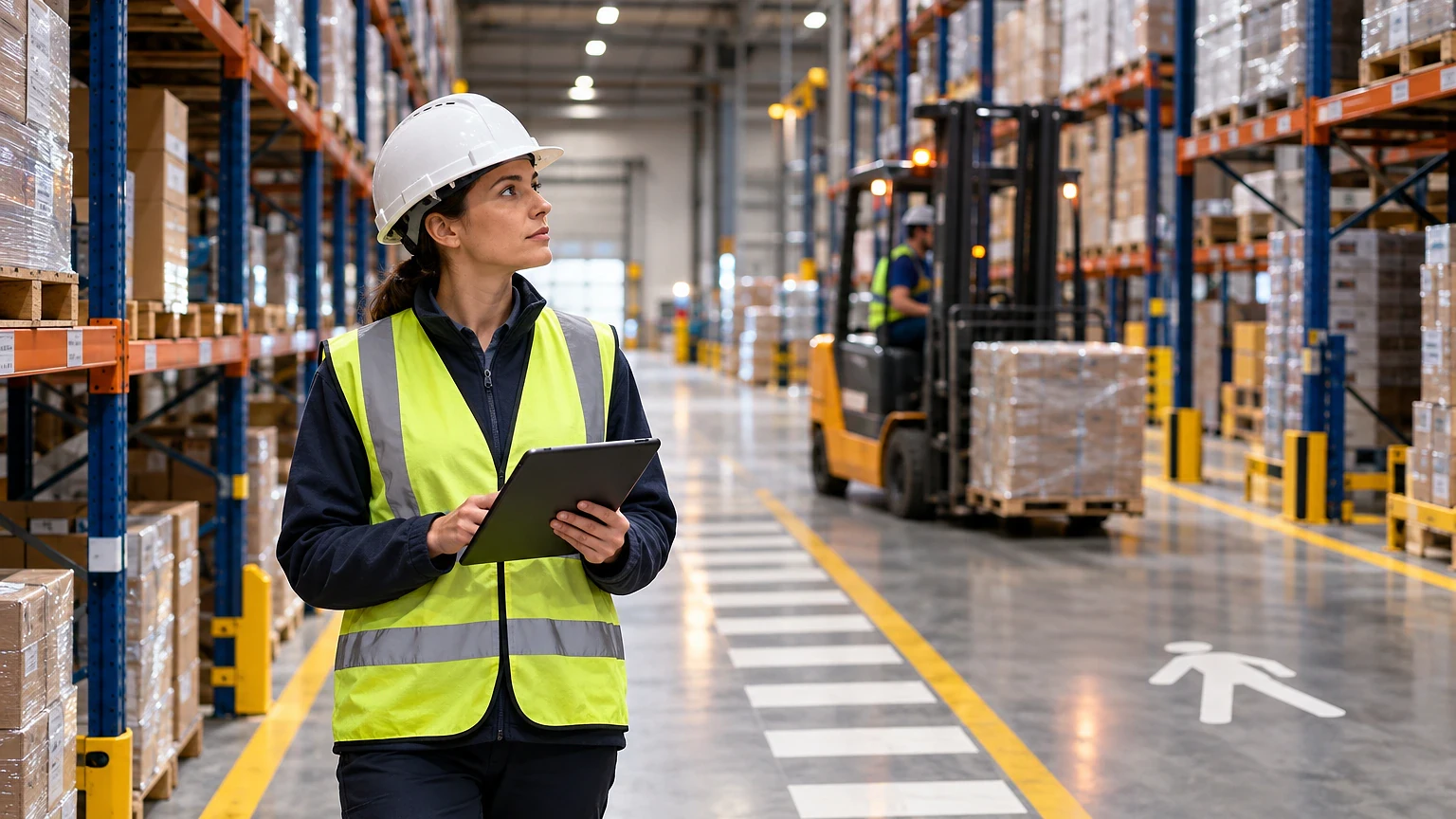
You’ve got a near-miss report on your desk, a forklift operator who’s been “meaning” to get recertified, and a VP asking why incident rates ticked up last quarter. Sound familiar? Warehouse safety rarely fails for one dramatic reason; it erodes in small, boring steps.
Warehouse safety isn’t a poster on the breakroom wall. It’s racking inspections, pedestrian aisles, PPE compliance, and a culture where people actually report problems before someone gets hurt. This guide covers the areas that matter most on the floor, with real numbers and the tools ops teams actually use.
Why Warehouse Safety Keeps Slipping Through the Cracks
Most warehouses don’t have a safety problem. They have a prioritization problem.
Pick rates climb during peak season. Headcount turns over fast, sometimes 40% or higher annually in distribution centers. New hires get rushed through orientation because the floor needs bodies, not binders.
OSHA logged warehousing and storage among its higher-injury industry codes for years, with forklift incidents, falls, and struck-by injuries topping the list. The pattern is consistent: understaffed shifts, rushed training, and equipment that’s overdue for inspection.
A site running three shifts with minimal overlap often has the worst safety culture, not because workers are careless, but because nobody owns the handoff. Racking gets bumped on third shift and nobody flags it until a day-shift picker notices a bent upright during a cycle count.
Forklift and Powered Equipment Safety
Forklifts cause roughly 7,000 serious injuries a year in the US, according to OSHA data. Most of those aren’t exotic failures. They’re pedestrian strikes, tip-overs on uneven surfaces, and overloaded forks.
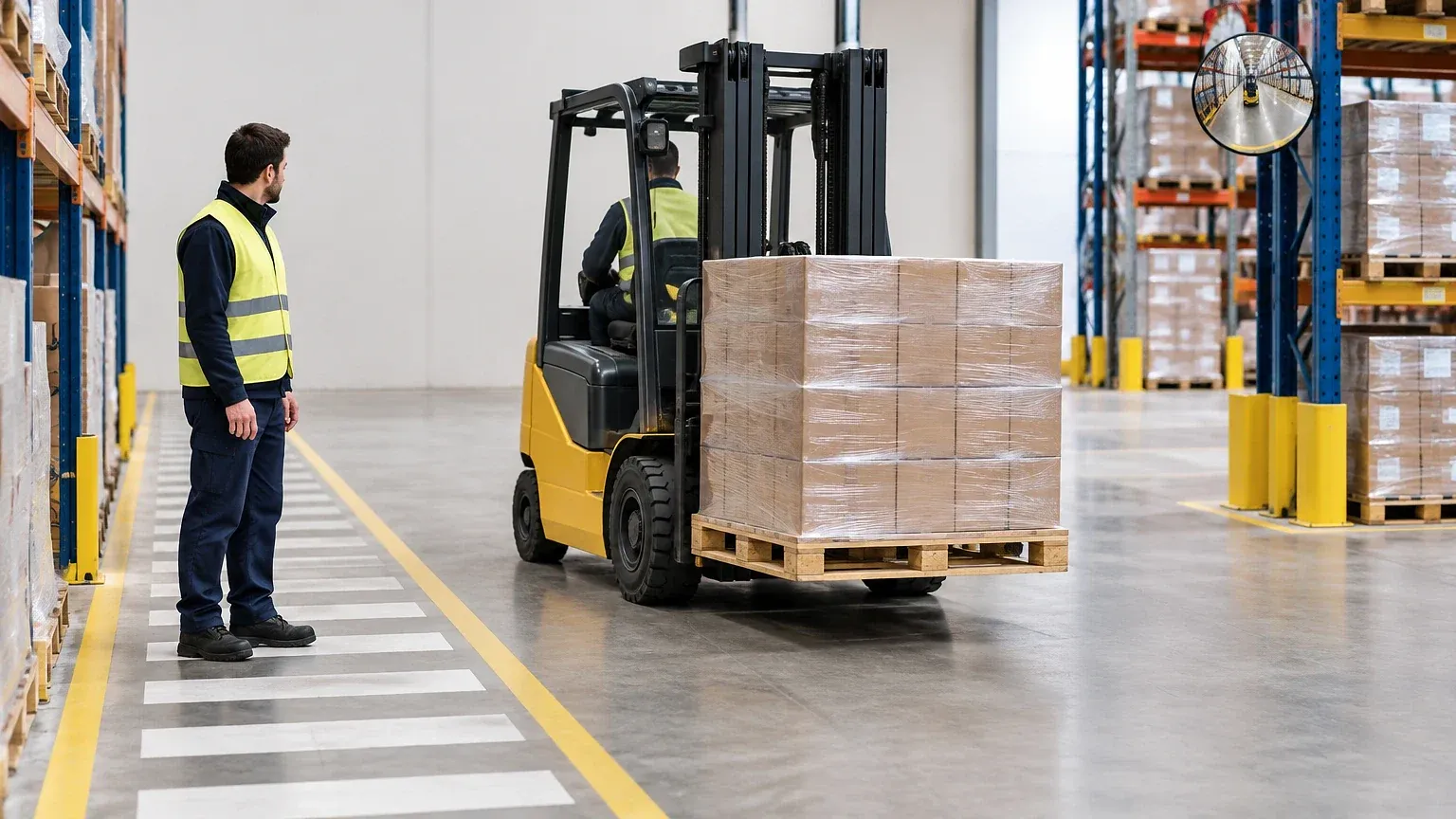
Every operator needs OSHA-compliant certification, renewed every three years minimum, sooner if they’re involved in an incident or near-miss. Don’t treat this as paperwork. Ride along during the practical evaluation instead of just checking the written test box.
Load capacity plates matter more than people think. A standard 5,000-lb counterbalance forklift loses capacity as fork height increases and as the load center shifts past 24 inches. Operators lifting pallets with an off-center load, say a water heater pallet, need to know the derate before they raise the mast past 10 feet.
Pre-shift inspections should take five minutes, not thirty seconds. Check tire wear, hydraulic leaks, horn function, and seatbelt interlocks. A forklift with a disabled seatbelt sensor is a tip-over injury waiting to happen, and interlock bypasses are more common than most safety managers want to admit.
Pedestrian separation is the cheapest fix with the biggest payoff. Painted walkways, physical barriers like Newton guardrail, and blind-corner mirrors at intersections cut struck-by incidents dramatically in high-traffic DCs. If your aisles don’t have marked pedestrian lanes, that’s priority one, not a nice-to-have for next quarter’s budget.
Racking Inspections and Load Limits
Racking failures are rare, but when they happen, they’re catastrophic, think cascading collapse across multiple bays.
Every rack has a load capacity rating stamped on a placard, typically set by the manufacturer per RMI (Rack Manufacturers Institute) standards. A standard selective pallet rack beam might carry 2,500 to 4,600 lbs per level depending on beam length and upright configuration. Exceeding that rating, even by a little, stresses welds and connectors you can’t see failing until they do.
Monthly visual inspections should check for bent uprights, cracked welds, missing safety pins on beams, and column protectors knocked out of place. Annual inspections, often done by a third-party RMI-certified inspector, go deeper, measuring deflection and column plumb.
Damage color-coding works well on the floor: green tags for minor cosmetic damage, yellow for damage requiring monitoring, red for immediate load removal and repair. A forklift operator who dents an upright should report it the same shift, not wait for the weekly walk.
Overloading isn’t always obvious. A pallet of canned goods looks identical to a pallet of packing peanuts, but the weight difference is enormous. Slotting software that flags SKU weight against bin capacity catches this before a picker stacks three heavy pallets on a rated-for-two beam.
PPE and Daily Compliance Checks
Personal protective equipment only works if people wear it correctly and it fits the job.
Standard warehouse PPE includes steel-toe or composite-toe boots, high-visibility vests, and safety glasses in areas with strapping or banding operations. Cut-resistant gloves matter in case-pack and returns processing, where box cutters cause a steady stream of minor lacerations.
⚠️ Warning: Never let employees swap out cut-resistant gloves for standard fabric gloves “because they’re faster.” Box cutter injuries account for a large share of OSHA-recordable incidents in receiving and returns areas.
Hi-vis vest color matters in mixed-traffic facilities. Some operations use orange for pedestrians and lime for equipment operators, making it easier for drivers to distinguish roles at a glance across a dim, 30-foot-high DC.
Daily compliance checks work best as a five-minute supervisor walk at shift start, not a quarterly audit. Look at boots, vests, and whether anyone’s propped a fire door open with a pallet jack. That last one sounds minor. It isn’t. Blocked fire exits are one of the most common OSHA citations in warehousing.
Warehouse Safety Technology and Monitoring Tools
Software and sensors have closed a lot of the visibility gap that used to rely on supervisors walking the floor.
Forklift telematics systems like Fleet Complete or I.D. Systems (now part of PowerFleet) track impact events, speed, and seatbelt usage in real time, flagging operators who need retraining before they cause an incident. Some systems lock out the forklift after a hard impact until a supervisor resets it, forcing a damage check.
Wearable proximity sensors, worn by pedestrians and mounted on forklifts, vibrate or alert when someone enters a blind zone. These run a few hundred dollars per unit and pay back quickly in high-traffic cross-dock areas where forklifts and foot traffic share the same forty feet of aisle.
Warehouse management systems increasingly bake in safety workflows too. A WMS like Manhattan Associates or Körber can flag SKU weight limits against bin capacity automatically, preventing the overloading problem mentioned earlier before a picker ever grabs the pallet jack.
Incident reporting apps replace the paper clipboard in the supervisor’s office. A simple mobile form that lets any employee photograph a hazard, like a liquid spill or a bent rack beam, and route it instantly cuts response time from hours to minutes.
Warehouse Safety Training Programs That Actually Stick
A one-time orientation video doesn’t change behavior six months later.
The strongest programs run on a cadence: new-hire certification, 90-day refreshers, and annual recertification tied to actual equipment, not just slides. OSHA’s 10-Hour and 30-Hour General Industry outreach courses give a solid baseline, but they’re a floor, not a ceiling.
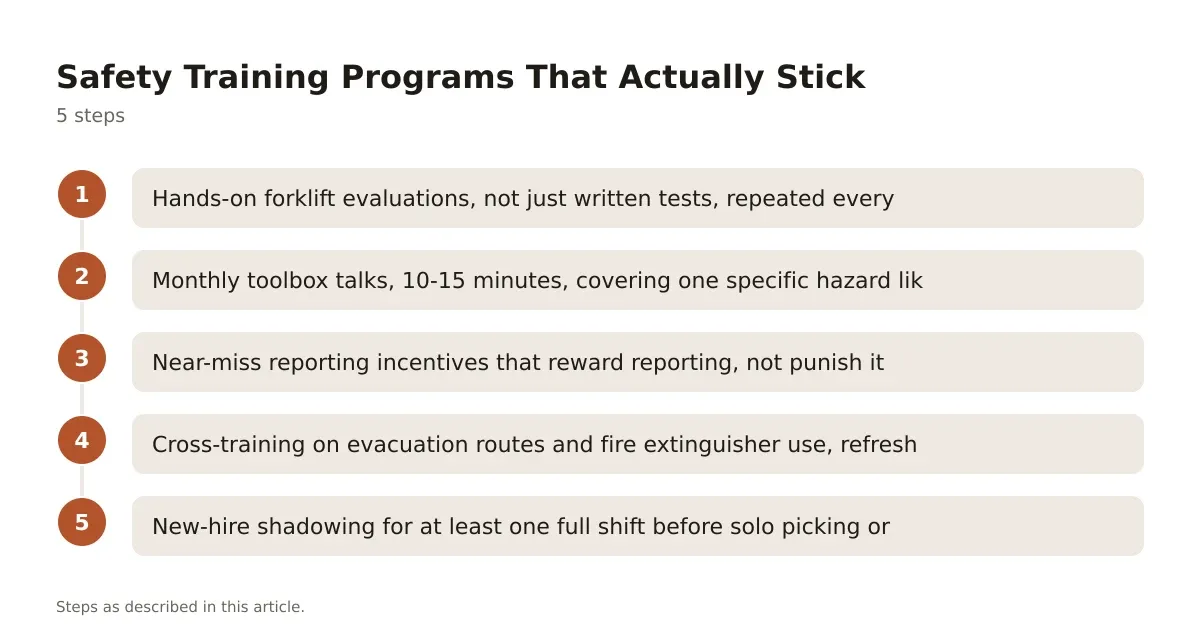
Here’s what effective ongoing training usually includes:
- Hands-on forklift evaluations, not just written tests, repeated every three years
- Monthly toolbox talks, 10-15 minutes, covering one specific hazard like racking damage or spill response
- Near-miss reporting incentives that reward reporting, not punish it
- Cross-training on evacuation routes and fire extinguisher use, refreshed annually
- New-hire shadowing for at least one full shift before solo picking or driving
Near-miss reporting is the piece most sites get wrong. If employees think reporting a close call gets them written up, they’ll stop reporting, and you lose the early warning signal entirely. The best safety cultures treat a near-miss report as a win, not a confession.
Tie training completion into your WMS or HR system so expired certifications automatically flag a worker’s badge. A picker whose forklift cert lapsed last month shouldn’t be able to clock into a reach-truck shift, and most modern systems can enforce that without a supervisor remembering to check.
Building a Warehouse Safety Program That Holds Up
Warehouse safety comes down to three things working together: equipment that’s actually inspected, people who are actually trained, and a reporting culture that surfaces problems early instead of after an injury.
None of this requires an enormous budget. Painted pedestrian lanes, monthly rack inspections, and a near-miss reporting app cost far less than a single OSHA recordable incident, let alone a lost-time injury. The sites that get this right treat safety as an operations metric sitting right next to pick accuracy and on-time shipping, not a separate compliance checkbox handled by one person in HR.
Start with the gaps that cause the most serious injuries first, forklift-pedestrian separation and racking load compliance, then build out training cadence and technology from there. Revisit your incident log every quarter and ask what the data is actually telling you.
Frequently asked questions
What is the most common cause of warehouse injuries?
Forklift-related incidents, including pedestrian strikes and tip-overs, rank among the top causes according to OSHA data. Falls from height and struck-by incidents involving falling inventory from racking round out the list. Most of these trace back to rushed training, poor pedestrian separation, or skipped equipment inspections.
How often should warehouse racking be inspected?
Visual checks should happen monthly, looking for bent uprights, cracked welds, and missing safety pins. A full annual inspection, often done by an RMI-certified third party, checks structural details like column deflection that a visual walk-through can miss.
What PPE is required in most warehouses?
Steel-toe or composite-toe boots and high-visibility vests are standard across nearly every facility. Safety glasses and cut-resistant gloves get added for specific tasks like strapping, banding, or box-cutter work in receiving and returns.
How do you improve near-miss reporting in a warehouse?
Make reporting fast, usually through a mobile app rather than a paper form buried in the supervisor’s office. Recognize and reward employees who report hazards instead of treating every report as a disciplinary trigger. Culture change here matters more than the tool you pick.
Does warehouse safety technology actually reduce incidents?
Yes, when it’s paired with follow-through. Forklift telematics and proximity sensors flag risky behavior and near-misses, but the data only helps if supervisors act on it with coaching or retraining. Technology without a response process just generates reports nobody reads.
Most of these incidents start at the loading face, so it is worth reviewing how your counterbalance forklift fleet is specified and operated.