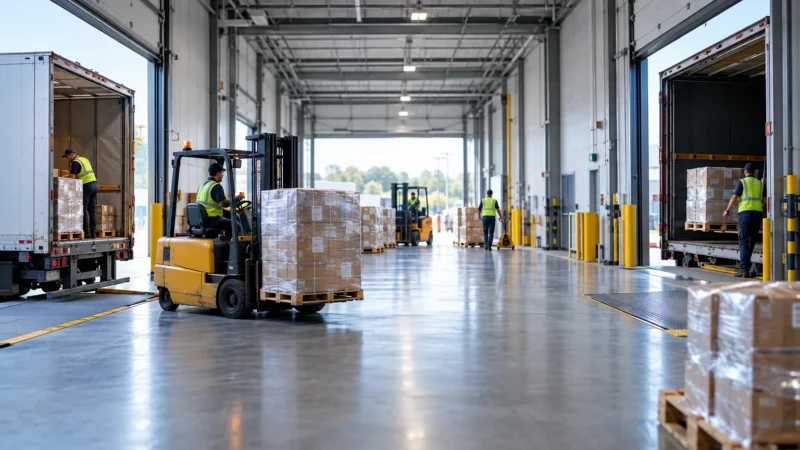
The dunnage meaning people need is simple: dunnage is the material you pack around cargo to stop it moving, rubbing or crushing while it travels. Timber blocks, inflatable bags, foam inserts, corrugated sheets and steel bracing all count.
Most people meet the word on a packing list or a freight invoice and assume it is just padding. It is more specific than that. Padding cushions, whereas dunnage also braces, separates and blocks, and the distinction matters when a claim turns on whether a load was properly secured.

Dunnage meaning in plain terms
Dunnage is anything placed in a container, trailer or hold to protect goods in transit. It is not part of the product and it is not the shipping carton. It exists purely to manage what happens during the journey.
Think about what a container experiences. Weeks at sea, constant vibration, hard braking, stacking pressure, temperature swings. Goods packed tightly against each other survive that; goods with room to shift do not. So dunnage mostly removes the room. Bear in mind too that a container rarely holds one uniform thing, so mixed loads need far more thought than matched pallets do.
Where the word comes from
The term is old and nautical. Sailors laid loose wood and brushwood in the bottom of a hold to keep cargo clear of bilge water and to wedge barrels in place.
The materials have modernised while the job has not changed at all. A plastic honeycomb insert in a car parts container does exactly what the brushwood did: it keeps goods off the floor and stops them sliding. Understanding that origin makes the dunnage meaning easier to remember. The word has therefore stayed remarkably stable for centuries, even as the materials changed completely.
Dunnage meaning in shipping vs packaging
In ocean and road freight, the word means load securing: blocking, bracing and filling voids inside the container. The focus is the whole shipment rather than any individual box.
In ecommerce fulfilment, people use it more loosely for whatever goes inside a parcel around the product, including air pillows and crumpled paper. Both usages are current, so read the context. Our guide to freight transport covers the container side, where the stakes are considerably higher.
The common types and what each suits
Timber remains the workhorse for heavy or irregular loads, since you can cut and nail it to fit anything. Dunnage bags inflate between pallets and are the fastest way to kill a void in a container.
Foam suits fragile and high-value goods, and custom-cut inserts hold components precisely. Corrugated sheets and honeycomb separate layers cheaply. Steel and strapping handle machinery and anything that would simply shrug off lighter bracing. Most real shipments mix two or three of these rather than relying on one.
Choice usually comes down to three questions. How heavy is the load, how fragile are the goods, and how long is the journey? Heavy and robust favours timber and strapping. Light and fragile favours foam and board. A long sea leg argues for more of everything, since time multiplies every small movement.
What the dunnage meaning covers in a container
Four jobs, and a good packing plan addresses each. Blocking stops the load moving forward under braking. Bracing stops lateral movement as the vessel rolls.
Void filling removes the gaps that let pallets build momentum. Separation keeps layers and product types apart, which matters for crushing and for contamination. Miss one of the four and the other three often fail together, because a load that starts moving rarely stops politely.
Reusable versus single-use
Single-use materials cost less per shipment and need no return logistics. They suit one-way freight and varied product mixes, which describes most general cargo.
Reusable systems, typically moulded plastic or steel racks, suit closed loops. Automotive supply chains use them heavily, since the same components travel the same lane repeatedly. The arithmetic turns on return freight: if bringing the empties back costs more than buying new, reusable loses regardless of how sustainable it sounds.
Weight is the quiet factor in that calculation. Steel racks protect superbly and add hundreds of kilograms to every leg, which shows up on the freight invoice whether the container is full or not. Plastic splits the difference, and plenty of operations settle there for exactly that reason.
Mistakes that cause damage claims
The first is underfilling voids. A ten-centimetre gap looks harmless in a stationary container and becomes a battering ram after two days at sea.
The second is ignoring wood treatment rules. International shipments using timber must meet ISPM 15, which requires heat treatment or fumigation and a visible stamp. The International Plant Protection Convention sets the standard, and USDA APHIS enforces it at American ports. Untreated timber gets containers refused.
The third is loading heavy goods high. No amount of bracing compensates for a top-heavy stack, so build weight downward before reaching for more material.
A fourth mistake is reusing damaged material. A crushed honeycomb insert or a punctured airbag offers almost no protection while looking as though it does. That is worse than packing nothing at all, because nobody thinks to check again.
What to check before a load ships
Walk the container before the doors close. Can anything slide more than a centimetre or two? Is weight distributed evenly across the floor and kept low?
Check that timber carries the treatment stamp if the shipment crosses a border. Confirm the bracing suits the actual mode, because sea freight demands more than a short road trip. Finally, photograph the loaded container. That photograph settles most disputes about whether a load was secured properly, and it costs nothing.
Agree the standard in advance with whoever loads for you. A packing specification naming materials, void tolerances and weight distribution removes the argument later. It also gives a new loader something concrete to follow on their first day.
How the dunnage meaning affects your packaging costs
There is a genuine trade-off here. Material and labour cost money on every shipment, while damage costs money occasionally but heavily, including replacement, freight and the customer relationship.
Track your damage rate by lane and product rather than guessing. Where claims cluster, add material. Where they never occur, trim it. Weight matters too, since heavy timber adds to a freight bill on every single leg, and your fulfilment operation absorbs the handling time at both ends.
Frequently asked questions about dunnage
What is the simplest dunnage meaning?
Material packed around cargo to stop it moving or being damaged in transit. It protects the goods rather than forming part of them.
Is dunnage the same as void fill?
Void fill is one kind of dunnage rather than a synonym. Filling gaps is only one of the four jobs; blocking, bracing and separation are the others, and a load can be fully packed out yet still badly secured.
Who pays for it?
Usually the shipper, as part of preparing the load. Carriers sometimes supply bags or bracing and bill it as an accessorial charge, so check the quote. Where the Incoterm shifts responsibility, it can shift this cost with it.
The practical takeaway
Treat it as load engineering rather than packing filler. Address all four jobs, keep weight low and evenly spread, and check treatment stamps before anything crosses a border. Photograph each loaded container. Then let your damage data decide where to add material and where to stop paying for protection nothing actually needs. Understood properly, the dunnage meaning is less about padding than about keeping a load exactly where you put it.