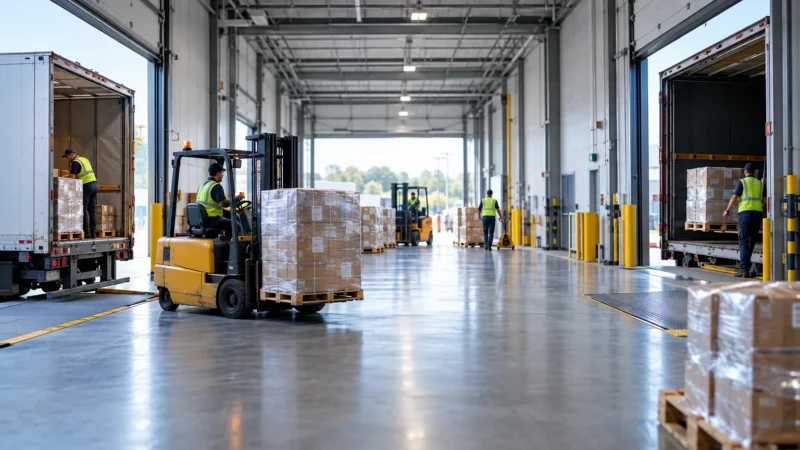
Freight transport is the business of moving goods in bulk between businesses, as opposed to delivering parcels to consumers. It covers road, rail, ocean, air and pipeline, and most supply chains use several of them in sequence.
The vocabulary puts people off more than the subject deserves. Underneath the jargon sit a few simple trade-offs: speed against cost, volume against flexibility, and control against convenience. So this guide walks through the modes, how pricing actually works, and the small decisions that quietly add a third to a freight bill.

Freight transport in plain terms
Three parties appear in almost every shipment. The shipper sends the goods. A carrier moves them. The consignee receives them, and our guide to consignee meaning covers that role in detail.
A fourth party often sits in the middle. Freight forwarders and brokers do not own trucks or ships; they buy capacity in bulk and resell it, handling documents and customs along the way. Smaller shippers usually reach freight transport capacity through one of them rather than contracting carriers directly.
The five modes and what each is for
Road dominates short and medium distances. It goes door to door, needs no transfer, and suits anything under roughly a thousand kilometres. Rail costs less per tonne over long distances and handles bulk commodities well, though it moves terminal to terminal rather than door to door.
Ocean carries the overwhelming majority of international trade by volume. It is cheap and slow, with transit times measured in weeks. Air reverses that: fast, expensive, and reserved for goods where the value or the urgency justifies it. Pipeline serves liquids and gas only, and most shippers never touch it.
Most international shipments combine several modes. A container may travel by truck to a port, cross by ocean, then move inland by rail and truck again. Each handover adds cost and risk. So reducing the number of transfers often saves more than switching mode does.
Freight transport vs logistics
The two words get used interchangeably, which muddles planning conversations. Freight transport is the physical movement between two points. Logistics is the wider discipline that decides which points, in what order, holding how much stock along the way.
Put differently, transport is a service you buy and logistics is a system you design. A company can buy excellent trucking and still run a poor supply chain, usually because the network has warehouses in the wrong places. Fixing the second problem saves far more than negotiating the first. Both matter, though they sit in different budgets and usually in different jobs.
What freight transport costs are built from
Four components make up most quotes. Line haul covers the movement itself and reflects distance, mode and lane. Fuel surcharge floats with diesel or bunker prices and often moves weekly.
Accessorials cover everything extra: liftgate, residential delivery, inside delivery, detention when your dock keeps a driver waiting, redelivery when nobody accepts the load. These surprise people most. The fourth component is capacity pricing, which reflects how balanced a lane is. A route with plenty of return freight prices lower than one where trucks come back empty. Ask for the accessorial list up front, because freight transport quotes only compare honestly once those charges sit side by side.
Full truckload, less-than-truckload and parcel
Full truckload means you buy the whole vehicle. It travels direct, handling is minimal, and damage rates stay low. Beyond roughly ten pallets it usually beats the alternatives on price as well.
Less-than-truckload pools your pallets with other shippers. It costs less for small volumes but moves through terminals, so transit is slower and handling damage more likely. Pricing depends on freight class under the national classification system, which weighs density, stowability, handling and liability. Parcel suits anything under about thirty kilograms, and it prices on dimensional weight, meaning a light bulky box bills as though it were heavy.
Incoterms and who carries the risk
Incoterms are standard three-letter codes defining where the seller responsibility ends and the buyer begins. The International Chamber of Commerce publishes them, and the current set dates from 2020.
The practical point is simple. Under EXW the buyer collects from the seller door and carries almost everything. Under DDP the seller delivers duty paid and carries almost everything. FOB and CIF sit between, and they matter because the term decides who insures the goods at each moment. Getting this wrong means discovering, after a loss, that nobody insured the leg where it happened.
Mistakes that inflate freight bills
The first is guessing dimensions. Carriers remeasure, and a reweigh charge on a misdeclared pallet costs more than measuring would have.
The second is poor dock discipline. Detention charges start once a driver waits beyond the free window, and a slow unload on a Friday afternoon can cost more than the line haul.
The third is booking everything express out of habit. Audit what actually needs to arrive tomorrow, because plenty of shipments travel by air simply because somebody ordered late. Shifting even a quarter of those to road or ocean usually pays for a planner. Habit is expensive in freight transport, and nobody audits it unless somebody is asked to.
What to check before you book
Confirm the dimensions and weight you declare match the pallet you ship. Check the delivery site honestly: does it have a dock, or will the driver need a liftgate and an appointment?
Then read the accessorial schedule rather than only the headline rate, since that is where quotes diverge. Verify the Incoterm matches what your contract says. Finally, check the carrier liability limit, because standard cover is often far below the value of the goods, and separate cargo insurance costs little by comparison. Safety and compliance records are public too, and the Federal Motor Carrier Safety Administration publishes carrier data worth a glance before you commit.
How freight transport fits the wider supply chain
Transport cost and inventory cost pull against each other. Shipping in large infrequent loads cuts freight per unit and raises holding cost. Shipping little and often does the reverse.
The right answer depends on margin, shelf life and demand stability rather than on freight rates alone. Network design matters too, since cross-docking removes storage entirely for fast-moving goods. Working through a third-party logistics provider buys you their negotiated rates, which usually beats what a smaller shipper can obtain alone.
Frequently asked questions about freight transport
How is freight transport priced?
Mostly on weight, volume and distance, adjusted for lane balance and mode. Part loads add a freight class based on density and handling. Parcel and air use dimensional weight, so bulky light goods price as if heavier.
What does a freight forwarder actually do?
It buys capacity from carriers and resells it, arranging documents, customs clearance and the handovers between modes. Forwarders suit shippers without the volume to contract carriers directly, or without the staff to manage international paperwork.
How long does ocean freight take?
Port to port across the Pacific typically runs two to four weeks, and Asia to Europe rather longer. Add time at both ends for inland movement and customs, then add a buffer, since schedule reliability varies considerably by season and route.
The practical takeaway
Match the mode to the urgency rather than to habit, and measure your pallets before you declare them. Read the accessorial schedule, agree the Incoterm in writing, and check whether carrier liability actually covers your goods. Then look one level up. Most savings in freight transport come from shipping less often, from better-placed stock, and from loading trucks properly, not from squeezing the rate.